Unpacking Misogynoir #1 : Y’all Been Hating Bitches Since 1615
previously published in 2022 via mediumWhat if I told you misogyny, as a term, was first seen in 1615 in a pamphlet by a white man about his hate for women? And what if I told you that he called his followers, who also hated women, misogynos? Wild right? Misogyny is not a new term or way of thinking and although we have a clue that it’s been around since the very beginning of humanity, the actual word was first used in the 17th century in a pamphlet called The Arraignment of Lewd, Idle, Froward, and Unconstant Women written by the original, documented woman hater, Joseph Swetnam. What is super interesting is that misogyny has become such a vile and violent way of thinking and it is even more violable for Black women.
In a previous blog, I talked about how many of these podcasts created by cisgender heterosexual men can sometimes perpetuate misogynoir. In that post, I briefly explained what Misogynoir is and what it does, mainly in reference to podcasts that degrade Black women, but I wanted to, and also promised, to give a better overview of this term. Along with the overview, I promised to provide resources, and although it’s been 7 months since that original post, I want to be a person of my word and deliver. Over the next few months, I will be talking about misogynoir and looking to explain it in reference to not only my research but also how it manifests itself in digital spaces. I hope that you are ready for tea because it is hot.
Misogynoir is nothing new. This phrase was coined in 2008 by Moya Bailey, but the action of hating Black women because they are indeed BLACK and WOMEN dates back to enslavement. There has been plenty of talk among Black women scholars, everyday intellectuals, and feminists who point out this form of hatred and how it is uniquely different than what we know in our society as misogyny. So, what is misogynoir? Moya Bailey states it is “the anti-black racist misogyny that black women experience, particularly in the US visual and digital culture.” To put it in even simpler terms, I see misogynoir as the hatred of Black women because of their intersecting identities — particularly their race and gender. Both of these identities play a role in how Black women are treated in society and control the many harmful stereotypes and narratives we see in media, literature, and even in our day-to-day lives.
Now that we have a better understanding and foundation for what misogynoir is, we can look at some examples of it in popular culture and the past. Many of these examples have been discussed at great lengths on Black Twitter, and some have not but all of them in some form have misogynoiristic underpinnings, whether it be in ya face or subtle.
Scholar Sadiya Hartman talks about the way the Black woman was seen as unrapeable during enslavement. In her text Scenes of Subjection (Chapter 3: Seduction and the Ruses of Power), she discusses the laws and cases that deemed Black women as unable to be raped. This didn’t mean that Black women couldn’t get raped; it meant that no one would be held accountable for raping them. This is one of the earliest forms of misogynoir that I have come into contact with in my studies. It shocked me that this ideology impacted even the legal systems during enslavement.
Black feminist scholar Patricia Hill Collins, in her text Black Feminist Thought (Chapter 4: Mammies, Matriarchs, and Other Controlling Images), defines the term controlling images (which she coined) which are the stereotypical images created to dominate Black women and keep them subordinate. These stereotypes are crucial in how Black women are seen and treated in society. They are the following Welfare Queen, Mammy, Matriarch, Jezebel, and Sapphire.
Welfare Queen: poor, working-class Black women who make use of social welfare benefits. Many people associate this controlling image with the concept that Black women who are on government assistance are lazy. In Dorothy Roberts’s book Killing The Black Body, she talks about how this image has informed how society views Black women’s reproductive rights, opening them up to eugenic practices to limit the number of children they have due to their need for government assistance.
Mammy: the faithful, obedient servant. We have seen this image in contemporary movies like The Help featuring Viola Davis as the maid who is under the control of her white employers but does not complain about her mistreatment. This image dates back to minstrel shows where they would show a fat black woman with a head scarf who was not educated and abided by their white employers (masters) rules almost as if they were an obedient dog.
Matriarch: symbolizes the “bad” black mother who fails to fulfill their “womanly” duties at home, contributing to Black civil society’s social problems. Black men during (See: The Moynihan Report: The Negro Family, The Case For National Action) used this image to chastise the Black woman for being “too independent” and using that as a means to blame them for the downfall of the Black family.
Jezebel: whore or hoochie, represents a deviant Black female sexually. This image is often used against sexually free women. We see the hatred for these women currently when it comes to rappers like Megan Thee Stallion or rappers of the past like Lil’ Kim and Foxy Brown.
Sapphire: rude, loud, malicious, and overbearing. This image is the foundation for the term “angry Black woman,” which is used as a weapon to keep Black women silent and docile instead of being vocal and boisterous.
3. An example in pop culture is the Super Bowl XXXVIII halftime show featuring artists Janet Jackson and Justin Timberlake. Janet Jackson’s breast was exposed (in my opinion Justin did it on purpose, prove me wrong), and she was the person who was poorly treated due to this “wardrobe malfunction.” Jackson dealt with a lot of hate and disgusting takes in the media, and Justin Timberlake, a white man, walked away from this show (that he was a part of btw) unscathed. Even to this day, Janet is still the talk of Superbowl halftime shows in a negative way, and Justin Timberlake is living his life as if his actions did not impact a Black woman’s life.
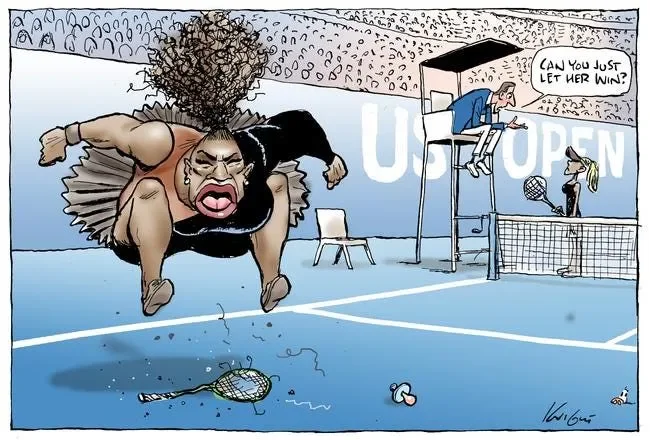
4. Serena Williams experiences misogynoir constantly because of her athletic ability and because she is a dark-skinned Black woman, but the instance that takes the cake is when The Herald Sun ran a comic that showed her as the sapphire (which we defined earlier). When Serena lost the match, she showed the emotion of someone who lost something they really wanted, but because she is a Black woman, her frustration was seen as a threat. This image made her seem unstable emotionally, mentally, and physically aggressive.
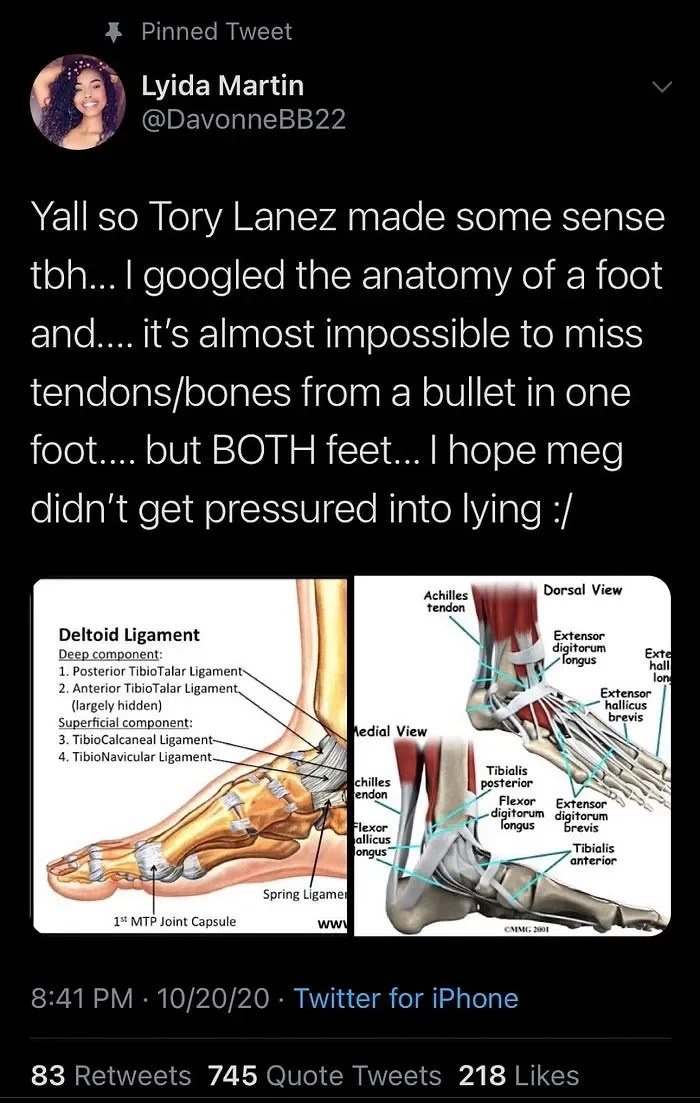
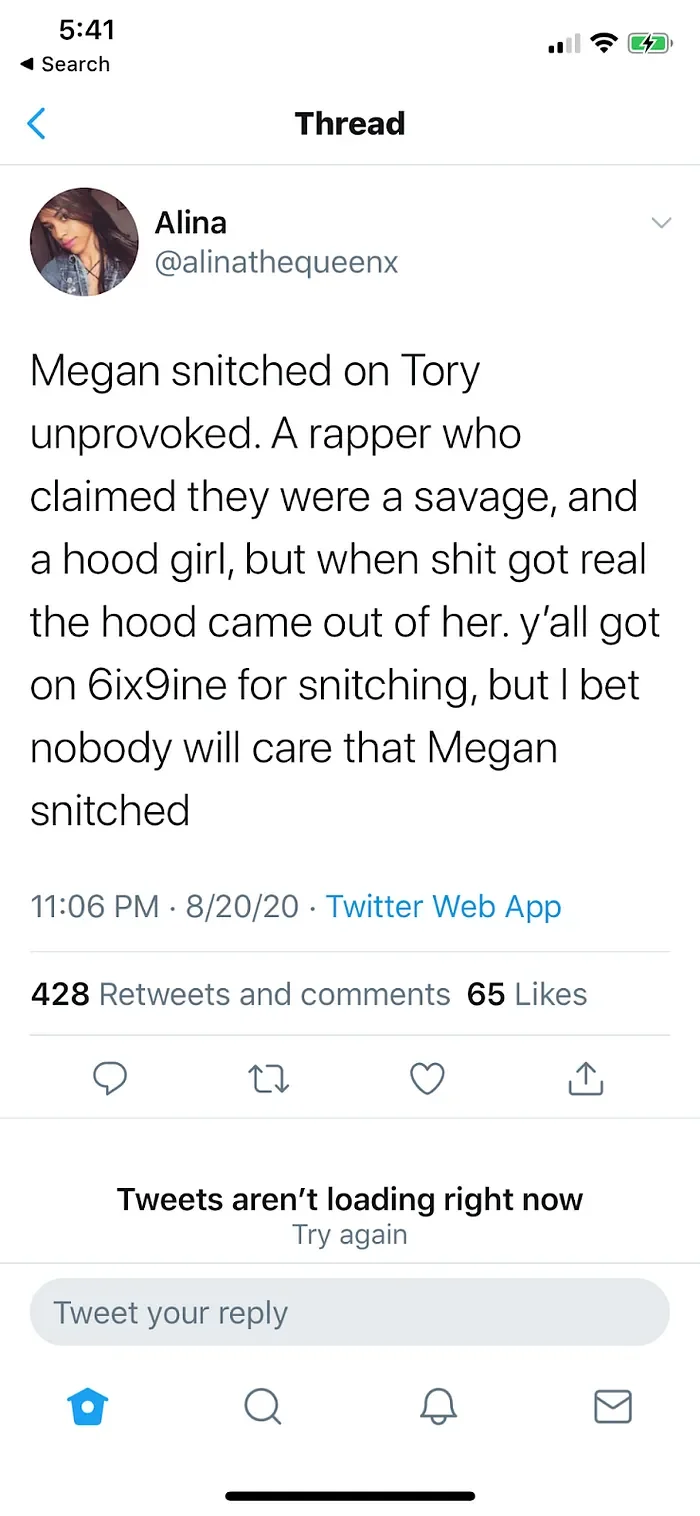
5. Artist Megan Thee Stallion was shot by artist Tory Lanez “allegedly” in the summer of 2020. When the news broke on social media and the information was clear on who the victim was and who the shooter was, there were a lot of mixed feelings and strong opinions. Below are some tweets that display misogynoiristic takes that attempt to gaslight Megan’s experience and invalidate her status as a rapper.
6. The last example that is probably the most talked about recently amongst all races is the altercation of Jada Pinkett Smith, Will Smith, and Chris Rock at the Oscars. Chris Rock made comments about Jada that were disparaging and ableist (she has alopecia, and he talked about her hair), and Will Smith proceeded to punch him on live television. Now, I cannot say if I do or don’t agree with what Will Smith did, but I can say that what Chris Rock did was a form of misogynoir. He took it upon himself not only to talk about a Black woman on television but to make fun of her appearance in front of mixed company (IYKYK).
These examples are just a few of hundreds, maybe even thousands of instances where misogynoir has been the driving force behind the treatment of Black women in our society. The purpose of this blog and those to follow is to make it known what misogynoir is and how it shows up in our day-to-day lives. In my next posts, I will be discussing misogynoir in digital spaces, my own experiences with misogynoir online and my research, short videos on misogynoir that I talked about on my TikTok, and ways we can protect ourselves online (to the best of our ability) when we are (Black women) attacked for being Black AND Woman. It is wild to me that people have been hating women since the 17th century or even earlier but it is even more wild that Black women experience this hatred at exponentially higher rates in our world, especially in the US.
More resources on Misogynoir (*SOME* Books, Podcasts, Essays, and Videos that talk about Misogynoir in some way). If you need access to specific text, please email me at info@kalyncoghill.com:
Misogynoir Transformed — Moya Bailey
Women, Race, and Class — Angela Y. Davis
A Voice From The South — Anna Julia Cooper
Age, Race, Sex, Class (Sister Outsider) — Audre Lorde
Double Jeopardy: To Be Black and Female — Frances Beale
When and Where I Enter — Paula Giddings
Laboring Women — Jennifer Morgan
Raping the inner lives of the black women in the Middle West — Darlene Clark Hine
Violence in the lives of black women: battered, black, and blue — Carolyn M. West
Battle Cries — Hillary Potter
Hood Feminism — Mikki Kendall
Bad Fat Black Girl — Sesali Bowen
Carefree Black Girls —Zeba Blay
Intersectional Tech — Kishonna Gray
America, Goddam — Treva Lindsey
Left of Black | Confronting Misogynoir in Digital Spaces with Dr. Moya Bailey
How to identify ‘Misogynoir’ — it’s where racism and sexism meet
***I use the following websites for texts to avoid purchasing them from Amazon: